One camera and a quiet room
LONDON, ONTARIO: FEBRUARY 2023
Not every job in this folder is a production. Some are one camera, one room, and somebody who has agreed to say the hardest thing he knows in front of it. This is the smallest job on this site, and the one where the work was simply to be ready and to stay out of the way.
BBC Spotlight, London, Ontario
Some jobs in this folder are big productions. This one was one camera and a quiet room.
BBC Spotlight came to us to conduct and record an interview with Jim Geddis, at his home in London, Ontario. He was going to talk, on camera, about his younger brother Stephen.
Stephen Geddis was ten years old, playing with friends in the courtyard of the Divis flats in Belfast, when he was hit in the head by a plastic bullet fired by a British soldier. He died two days later. He was the first person, and the youngest, to be killed by a plastic bullet.
The interview was for a documentary — Spotlight’s Lethal: The Secret History of Plastic Bullets — on BBC One Northern Ireland. Spotlight’s reporter put the questions from Belfast over a remote link. Jim sat in his own living room and answered. I set up a camera and filmed the interview for them.
That is the whole job, and it does not look like the rest of this folder. No crew call, no set, no lighting truck, no client behind the monitor. One man, in his own house, telling a television audience about his brother — and us, making sure it came back recorded and clean.
What he said is on the record, in the BBC’s own reporting. He describes Stephen as a quiet, timid child — a kid he would see out with his little friends. And then this: “This little guy never got to grow up and get married, have children of his own. Never happened.”
An inquest had earlier concluded that the decision to fire the plastic bullet was not justified or justifiable. The coroner found that Stephen had been in the courtyard with friends and posed no threat to the soldiers, and that the Ministry of Defence bore “significant responsibility” for failing to instruct its soldiers on how lethal the round could be. Those are the coroner’s findings, as reported — not ours to argue or to add to.
What I can say is what we did: we set up in a man’s home, recorded his account of a brother he lost as a boy, and stayed out of the way of it.
On our old site we filed this job under a plain heading — conduct / record remote interviews. It sounds like nothing. It is the part of the work with no poster frame — nothing finished to hang a page on, because the material belongs to someone else.
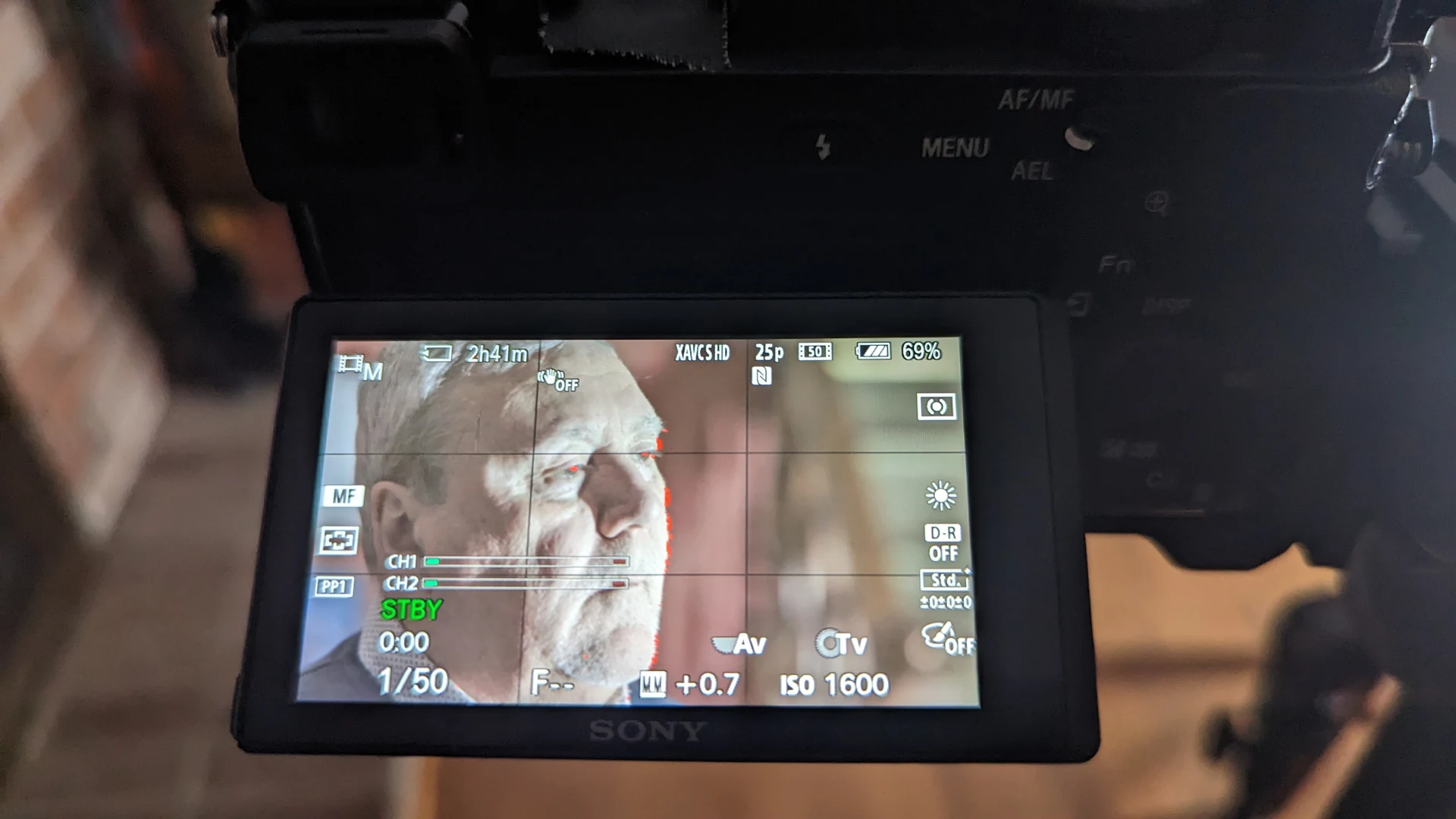
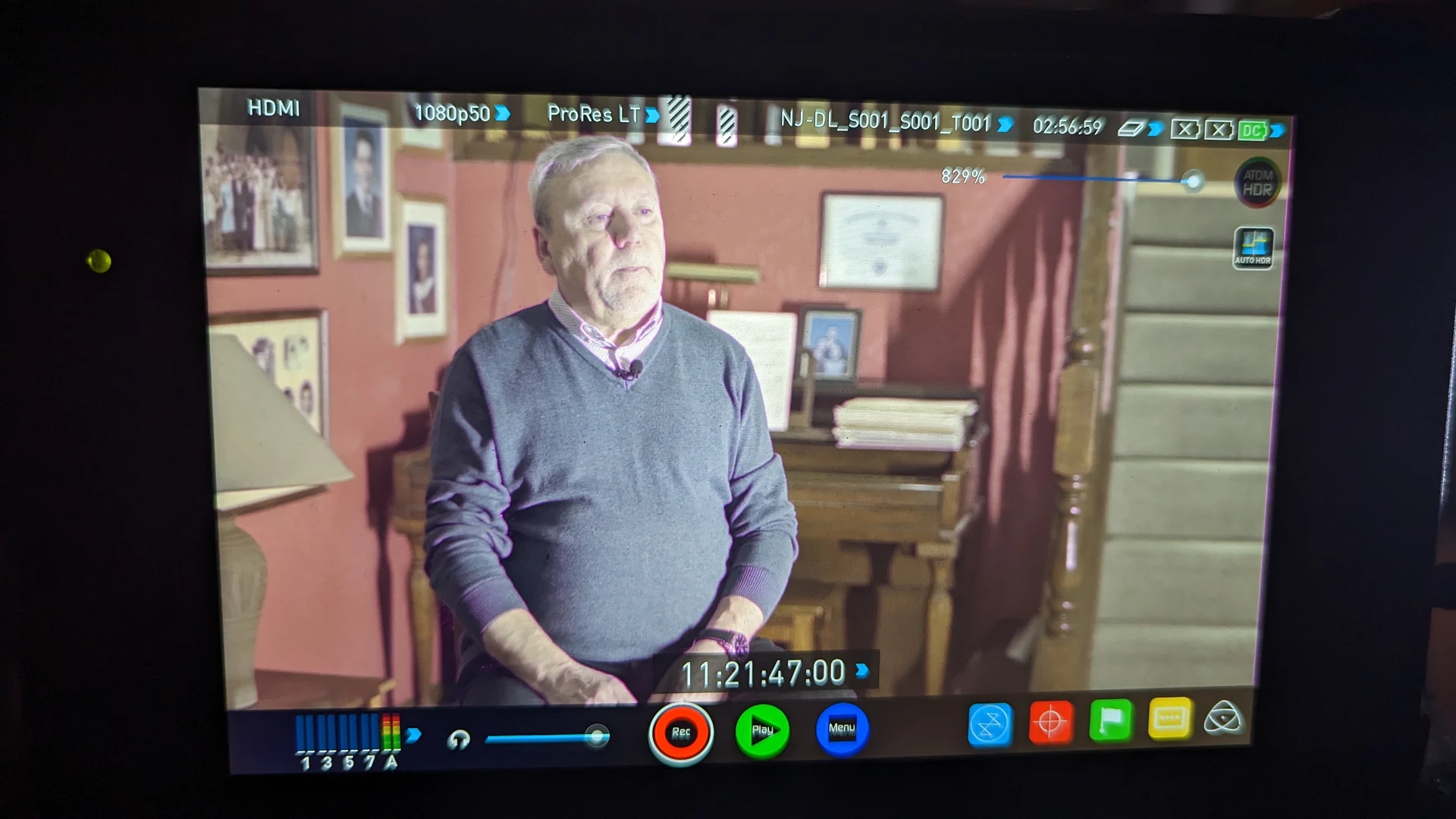
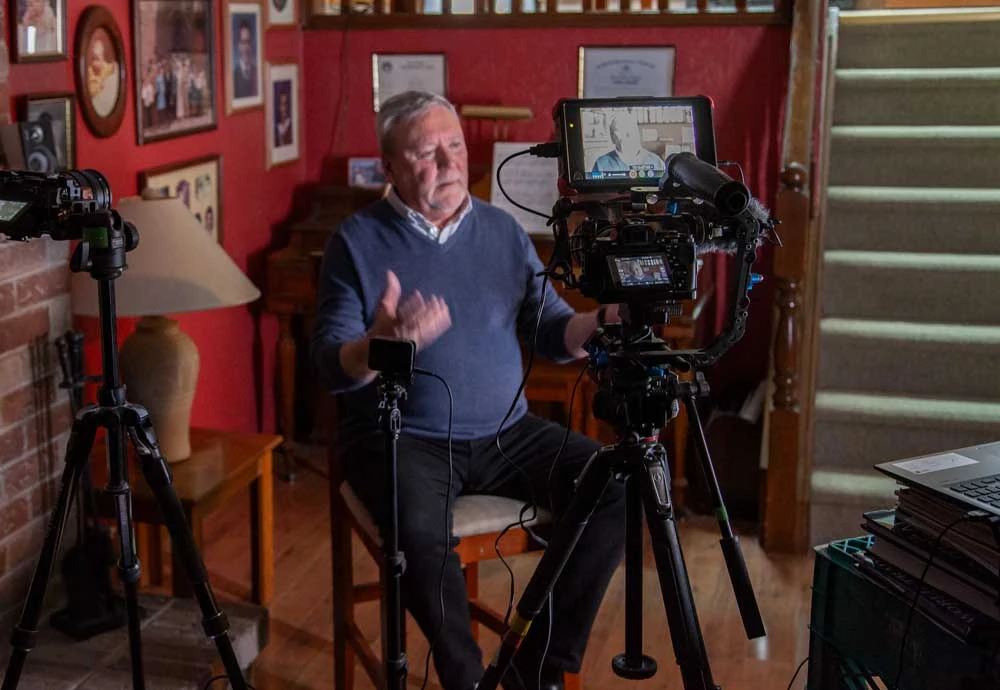
Three photographs survived. Two are from a phone: the camera’s viewfinder with Jim’s face in it, and the monitor playing the recording back. The third is the wider frame — Jim in his chair, the camera on its tripod, framed photographs on the wall behind him. That is the entire photographic record, and I would rather say so than dress the page up with pictures that aren’t ours.
There is no footage. No clip, no camera original, no master. We looked, and it is gone.
I have made films with hundreds of people in them. I have also made this. They are the same job, which is to point a camera at something true and not get in the way of it.
Months later I asked Jim if the BBC had ever told him what became of the interview. He sent back a link — the one the BBC had sent him. So we shot it, the BBC cut it, and the man in the chair was the one who told us where it went.
BY BRYAN BAKKER
Images